Therapy for women shaped by what happened, and by what was missing.
Childhood trauma and emotional neglect therapy in Charleston, SC, with virtual sessions anywhere in South Carolina.

"My childhood wasn't that bad."
Many of the women who come to us start there.
Your parents loved you. There was food on the table and someone at your recitals. Other people had it much worse, and you know that. So it's hard to explain why you're still so tired, so guarded, and so quick to apologize. You have a hard time saying what you need, and some part of you is always bracing for something.
You may have spent years trying to think your way out of it. You understand your family. You can explain why your mother was anxious or why your father went quiet. You've read the books. And still, some of what you learned early keeps running your life.
That doesn't mean something is wrong with you. It usually means something shaped you, and it's worth understanding.
What was missing matters too
When people hear "childhood trauma," they tend to picture something dramatic. Sometimes it was. Just as often, the lasting impact came from what was quietly absent.
Maybe no one comforted you when you were upset, so you learned to comfort yourself. Maybe you were praised for being easy or mature or no trouble at all. Maybe you became the steady one because someone had to be. Maybe you grew up reading a parent's mood the moment you walked in the door, or in a family, church, or community where certain feelings simply weren't welcome.
Maybe you were loved but not really known.
We won't tell you what to call your experience. We'll help you get curious about how your early world taught you to be in this one.

The patterns that once made sense
Much of what feels hard now started out as a smart solution.
Keeping everyone happy may have been how you stayed connected. Needing no one may have protected you from being let down. Perfectionism may have been the surest way to feel safe or worth something. Staying alert to what could go wrong may have helped you get through unpredictability. Going numb may have been the only safe place for feelings that had nowhere else to go.
These were intelligent adaptations. But what protected a child often costs an adult: closeness, rest, honesty, and the ability to want things for yourself.
Therapy here is not about criticizing those parts of you or forcing them to stop. It's about understanding them well enough that they no longer have to run the show.
Understanding it isn't the same as being free of it
You can understand why something happened and still need help with what your body learned from it.
This is where a lot of thoughtful, self-aware women get stuck. Insight matters, but it rarely reaches the tight chest before a hard conversation, the guilt that follows a simple no, or the way you disappear in relationships without meaning to.
At Ethredge Counseling Group, we work with the story and the body, the past and the present, what you think and what you feel. We pay attention to what happens inside you as you talk, not only to the words.
Depending on what you need, that might include:
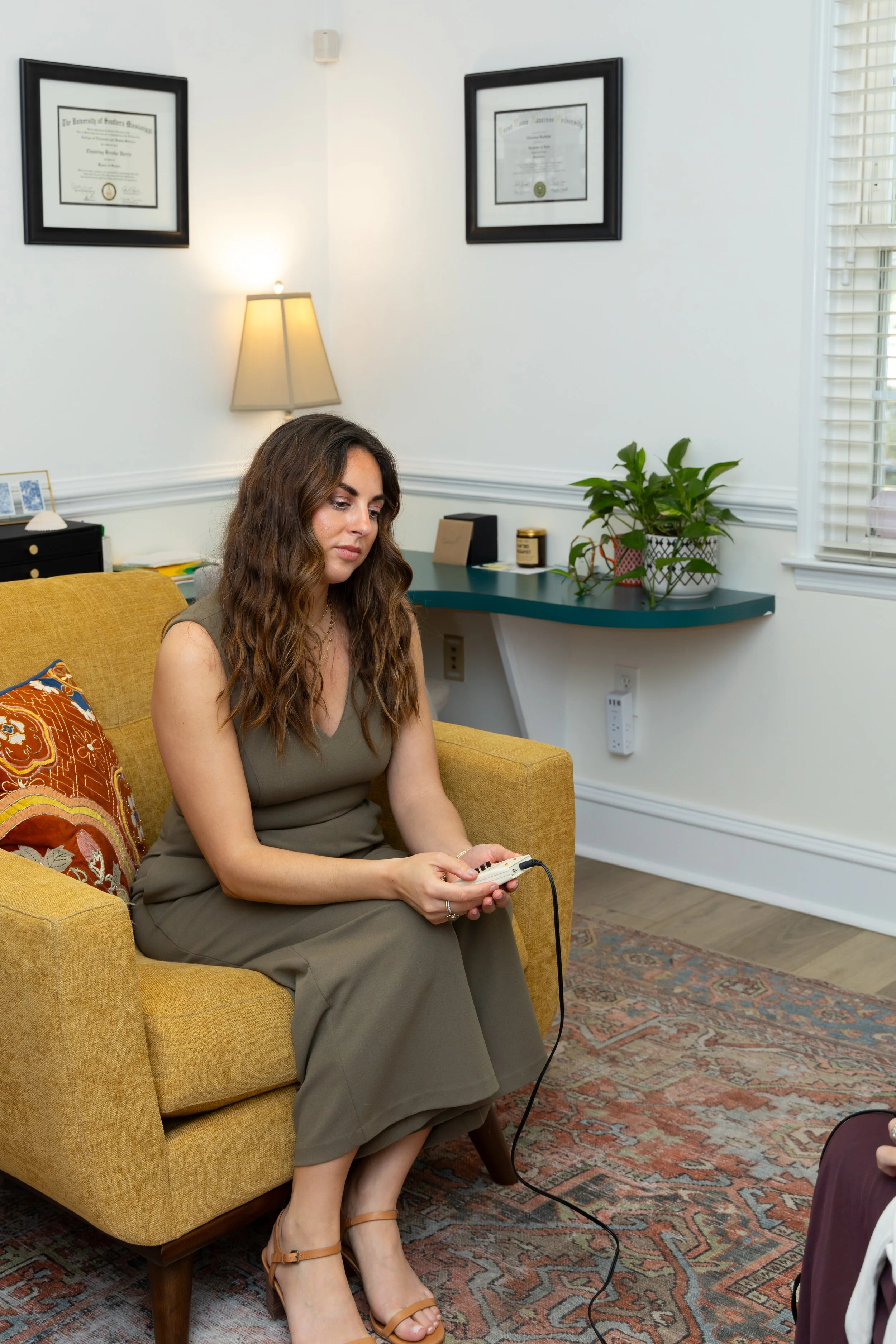
EMDR therapy to help painful memories and old beliefs lose their grip, so the past can feel more like the past.
Getting to know the different parts of you: the part that overfunctions, the part that's exhausted, and the younger part that still hopes someone will notice.
Slowing down to notice your body, so you can recognize what you feel and need before you override it.
Attachment-focused work that looks at how your earliest relationships shaped the ones you're in now.
Clear, useful context about how trauma and neglect affect people, offered when it actually helps rather than as homework.
Underneath all of it is the relationship with your therapist. For many women, being met with steady attention, warmth, and honesty is itself part of what heals. It isn't just how the work gets delivered.
What can change
The goal isn't to forget where you came from, and it isn't to label your family as the villain. It's to have more choice now.
Over time, women often find they can:
trust their own read on things;
notice what they need and let it count;
set a boundary without writing a closing argument for it;
let someone else be disappointed without deciding they've done something wrong;
feel anger without feeling ashamed of it;
accept care instead of only giving it;
grieve what they didn't get;
understand their parents without having to excuse everything;
and choose relationships based on what they actually want.
Hard things will still happen. You'll still get overwhelmed, angry, and sad sometimes. The difference is that you stop abandoning yourself when you do. You come to trust that you can meet what comes, and that you don't have to meet it alone.

Care that is personal from the first conversation
We're a boutique private-pay practice in Charleston. Our clinicians are rigorously trained in trauma, attachment, and relational therapy, and we take time to match you with the therapist best suited to your history and goals. Your treatment is built around you, and you'll deal with people, not a system.
We keep our practice this way on purpose, because depth takes time, attention, and a relationship worth investing in.
Frequently asked questions
-
Quite possibly. Many of our clients would never have described themselves that way. If you’re living with patterns you don’t fully understand, like people-pleasing, perfectionism, trouble knowing what you need, or feeling unseen in your closest relationships, it may be worth exploring where they began.
-
No. We move at a pace that feels manageable, and a lot of meaningful work happens without retelling every memory. You stay in charge of what you share and when.
-
EMDR (Eye Movement Desensitization and Reprocessing) is a well-researched approach that helps the mind and body process difficult experiences so they carry less charge in the present. It’s one option among several. Whether it’s a good fit is something you and your therapist decide together.
-
Yes. We see clients in person in Charleston and virtually anywhere in South Carolina.
-
We’re a private-pay practice. If you have questions about fees or out-of-network benefits, we’re happy to talk them through during your consultation.
You don't have to keep carrying it the same way.
If something here felt familiar, we'd be glad to talk. A free 20-minute consultation helps us understand what you're looking for and match you with the right therapist.