

The ECG Blog
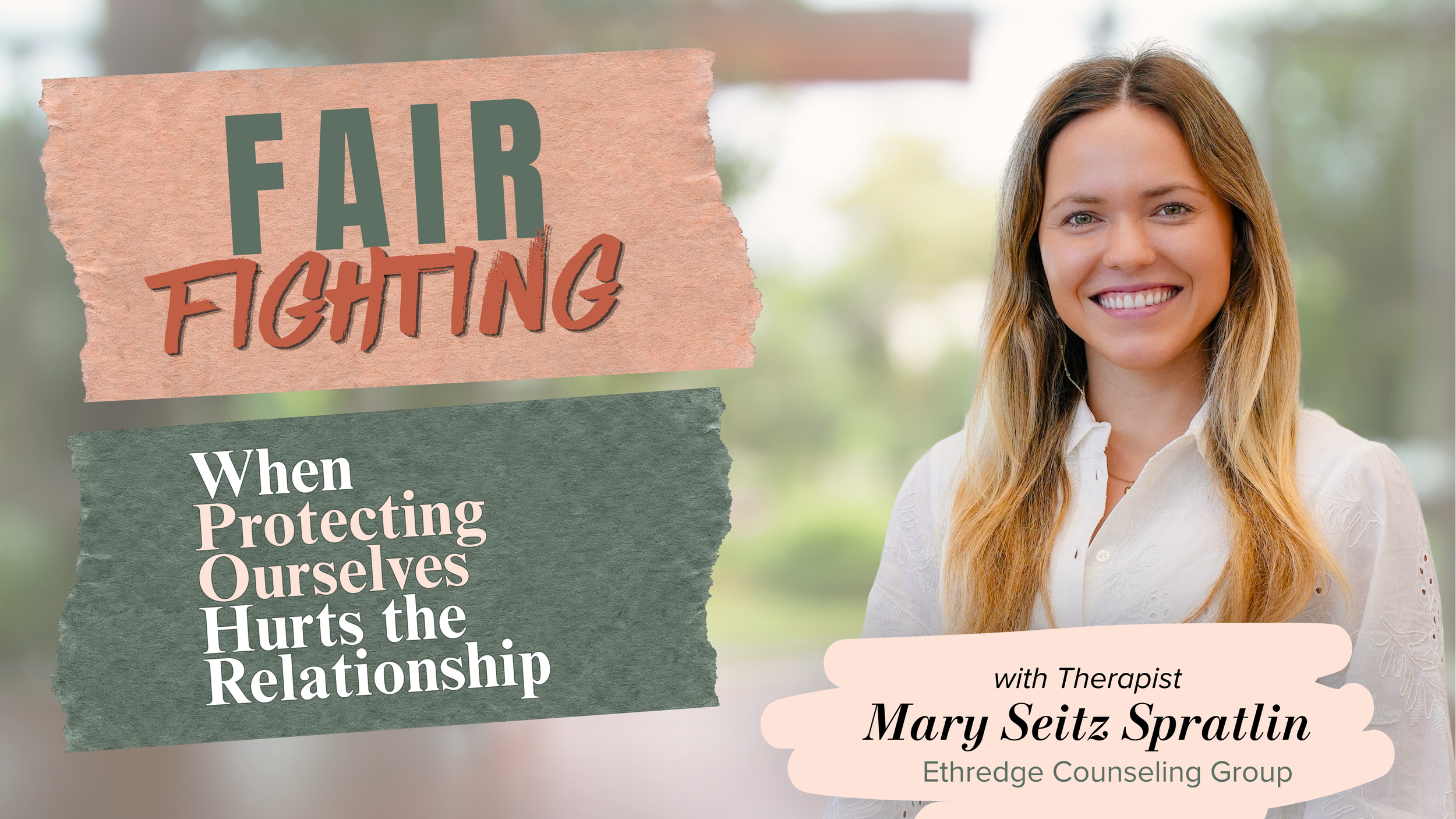
Fair Fighting: When Protecting Ourselves Hurts the Relationship
Arguments are a normal part of being close to someone.
Even couples who love each other very much are going to disagree, misunderstand each other, and sometimes say or do things that hurt.
Often, in the heat of a disagreement, the intensity of our reactions has less to do with the argument itself and more to do with what the relationship means to us.
When we feel hurt, dismissed, rejected, or afraid of losing connection, something in us wants to protect ourselves.
We might get angry, become defensive, raise our voice, shut down, or start listing everything our partner has done wrong.
In the moment, these reactions can feel like they are helping us stand up for ourselves.
The truth is, though, that the things we do to protect ourselves are the very things that create more distance between us.
The Purpose of Fair Fighting Rules
Fair fighting rules aren’t about asking couples to never get upset or to communicate perfectly when they are angry.
That's not realistic.
We are human, and the people we love are often the people who know exactly where our tender spots are.
Instead, fair fighting gives us some boundaries for what is and isn't okay when we are in conflict.
That starts with how we speak to each other. Name-calling, insults, screaming, or intimidation have no place in a productive disagreement.
Once someone feels attacked or unsafe, they are no longer in a good position to listen, understand, or problem-solve.
The conversation may continue, but connection and resolution usually aren't happening.
It also helps to focus on one concern at a time.
When we bring a long list of grievances into one conversation, it quickly becomes overwhelming.
One person may still be trying to understand the first issue while the other has already moved on to the fourth.
If there are several things that need attention, they can be addressed, but they don't all have to be solved in the same conversation.
Take Responsibility for Your Part
One of the easiest places to get stuck in an argument is deciding who started it.
“You did this, so I did that.”
It makes sense that we want our partner to understand what led to our reaction.
But explaining why we reacted doesn't remove our responsibility for how we behaved.
Our partner may have hurt us. We may have felt provoked. We may have been responding to something that happened five minutes or five years before.
None of that changes the fact that we are responsible for our own words and choices.
Taking responsibility doesn't mean taking all the blame. It means being able to look honestly at our own behavior and say, I didn't handle that the way I want to handle conflict with someone I love.
Stick with the Truth
When we're angry, words like “always” and “never” can come very easily.
“You never listen to me.”
“You always make everything about you.”
“You never care about what I need.”
The problem is that these statements are usually bigger than the actual problem. And once we make a claim that absolute, our partner may understandably start searching for the one exception rather than hearing the hurt underneath what we're saying.
Being fair means being accurate.
Instead of turning one painful pattern into a statement about everything our partner has ever done, we can talk about what is happening now and why it matters to us.
And while the past can absolutely need to be addressed, it doesn't always belong in the current argument.
If something from years ago still hurts, it deserves a real conversation. It probably won't get resolved by being pulled into the middle of an entirely different disagreement.
Tell Your Partner What Is Happening Inside
One of the most helpful shifts couples can make is moving away from accusations and toward describing their own experience.
Rather than telling our partner what they are doing wrong, we can try to explain what is happening inside of us.
“I felt lonely when we didn't have time together this week, and I need some reassurance that we're okay.”
That gives our partner something they can respond to.
It tells them what happened, how we experienced it, and what we are hoping for from them.
Know When to Step Away
There are also moments when continuing the conversation is simply not productive.
When emotions become overwhelming, we are much more likely to say things we don't mean, make decisions impulsively, or lash out because we want our partner to hurt as much as we do.
This is where taking a break can be incredibly helpful.
A break isn't about ignoring the problem or punishing your partner with silence. It is about giving both people enough space to settle down so they can return to the conversation with a clearer head.
It is helpful to agree on when you'll reconnect, maybe after 20 minutes, later that evening, or the following day.
The important part is that the pause has a purpose: to come back and continue the conversation.
Going for a walk, writing down your thoughts, taking a shower, or doing something else that helps you regulate can give you the space to figure out what you're actually trying to communicate.
The goal here is for both people to be working toward the same thing: a relationship where difficult conversations can happen without either person feeling like they have to defend themselves from the person they love.
The Most Important Thing
Fair fighting isn't about making conflict disappear.
It is about learning how to move through conflict without damaging the connection we are fighting so hard to preserve.
Because the person standing across from us isn't the enemy.
They are the person we love.
And sometimes, the most important thing we can remember in the middle of a fight is exactly what brought us into the relationship in the first place: this person matters to me.